Sediment-rich rocky habitat with oxygen-rich water.
Geographic distribution:
Endemic to Lake Tanganyika; reliably known from the northern part
of the lake. Southern populations traditionally attributed to this species
are taxonomically disputed.
Typical adult size:
Males up to 7 cm; females up to 5 cm.
Sexual dimorphism:
Sexes are difficult to distinguish visually; males are generally
larger than females.
Recommended aquarium size:
80 liters for a pair.
Aquarium setup:
Rocky layout with numerous caves and hiding places. Due to
intraspecific aggression, only a single pair should be kept unless the
aquarium is very large and highly structured.
Diet:
Omnivorous; feeds mainly on small invertebrates picked from
algae-covered rocks, ingesting algae incidentally.
Breeding:
Breeds year-round in caves. Eggs are laid every few days, resulting
in groups of fry of different ages and sizes coexisting around the parents.
Aggression:
Moderately aggressive within the species, especially during breeding
and brood care; aggression towards other species increases during spawning.
Special notes:
Characterized by a distinctive checkerboard pattern formed by
horizontal and vertical bars. Considerable variation in coloration occurs
even within the same locality, ranging from lighter to darker forms.
Northern populations from Makobola and Luhanga represent the core concept
of the species. Southern populations historically referred to as “Gombi
Transcriptus” (Kombe and Katoto) and populations from Kapampa, Korosha,
and Kazia are taxonomically disputed and are treated separately as
undescribed species.
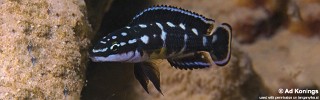
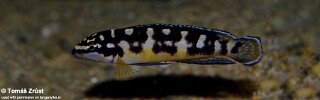
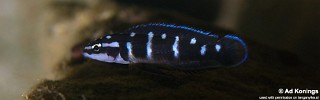
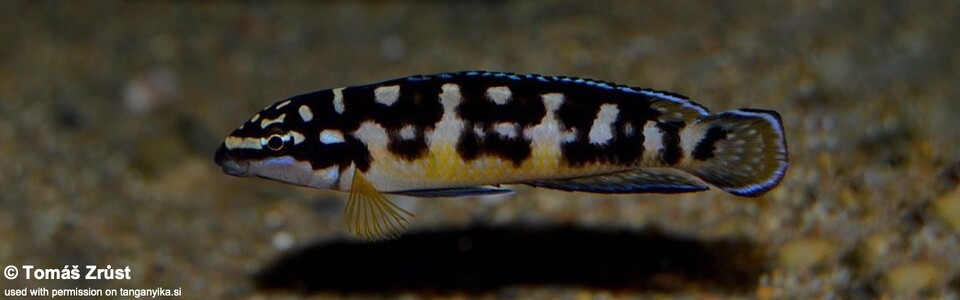




Photo gallery