Western shore of Lake Tanganyika in the Democratic Republic of Congo,
occurring from Kalemie southwards to Moliro.
North of this range, populations identified as Neolamprologus cf. petricola ‘Congo North’
are found from Kalemie northwards to Baraka.
Further south, populations identified as Neolamprologus cf. petricola ‘Zambia’
occur along the Zambian shore from the Cape Chaitika to Katoto.
Typical adult size:
Around 12 cm total length.
Sexual dimorphism:
No clear sexual dimorphism, except that males are larger than females
and develop a more pronounced frontal hump.
Recommended aquarium size:
200 L for a formed pair; larger aquaria are recommended for group setups.
Aquarium setup:
Provide a sandy substrate with scattered large rock formations forming
caves and crevices. The species strongly defends its territory, especially
during breeding.
Diet:
Carnivorous, feeding mainly on small invertebrates and occasionally on
small snails.
Breeding:
Breeds throughout the year. Highly prolific, with clutches of approximately
200–500 eggs. Males may live in harems with several females, although in
aquaria pairs are commonly formed and males are relatively tolerant
towards females.
Aggression:
Moderately aggressive; considerably calmer than Neolamprologus christyi,
but very territorial, especially when guarding eggs and fry.
Special notes:
Neolamprologus petricola is very similar to Neolamprologus modestus,
and some authors consider both taxa conspecific. Ad Konings (2015) treats
N. petricola as a synonym of N. modestus, although a clear boundary
between their distributions has not been identified.
Morphologically, N. petricola generally shows a higher body and a more
pronounced frontal hump in adult males compared to N. modestus.
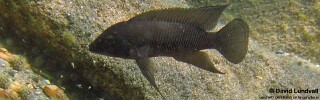
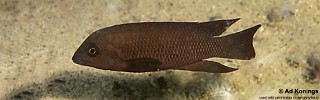
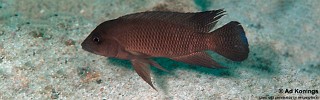
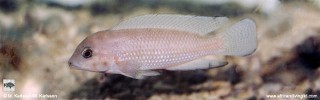
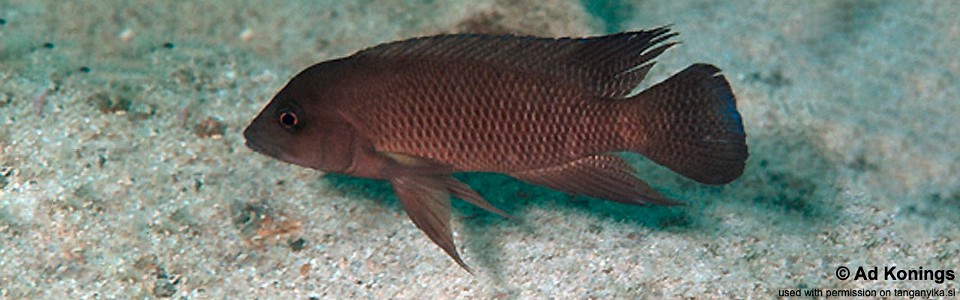
Both species display a cream-beige coloration that may become dark brown
depending on habitat and surroundings.
The closely related N. cf. petricola populations from Congo and Zambia
show noticeable geographic variation and are therefore treated separately
here, without assigning them formal taxonomic status.




North of this range, populations identified as Neolamprologus cf. petricola ‘Congo North’ are found from Kalemie northwards to Baraka.
Further south, populations identified as Neolamprologus cf. petricola ‘Zambia’ occur along the Zambian shore from the Cape Chaitika to Katoto.
Morphologically, N. petricola generally shows a higher body and a more pronounced frontal hump in adult males compared to N. modestus. Both species display a cream-beige coloration that may become dark brown depending on habitat and surroundings.
The closely related N. cf. petricola populations from Congo and Zambia show noticeable geographic variation and are therefore treated separately here, without assigning them formal taxonomic status.
Photo gallery