
Lake Tanganyika cichlids — species, locations & maps
Lake Tanganyika cichlids — species, locations & maps
tanganyika.si
Lake Tanganyika cichlids — species, locations & maps.
All images are used with permission of the authors. Unauthorized use is prohibited.
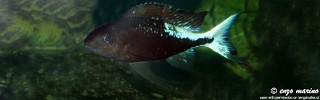
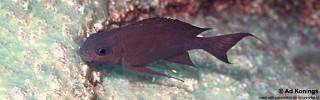
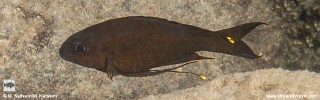
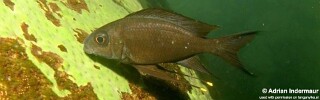
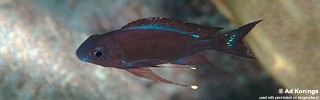
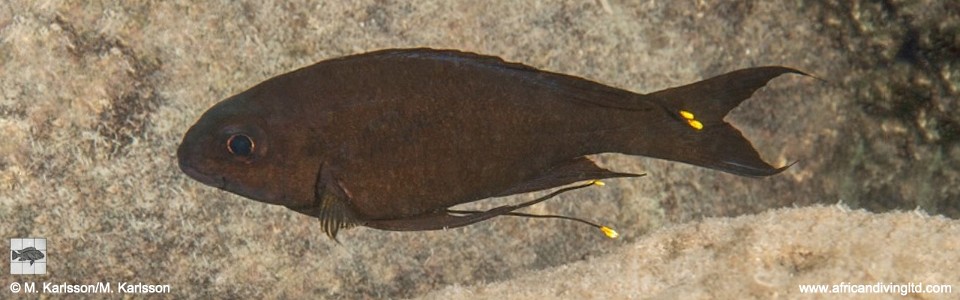



Often found in rocky environments, sometimes sympatrically with Ophthalmotilapia ventralis and Ophthalmotilapia nasuta, but typically at deeper levels.
Occurs between Kabwe in the north and Kitango Rocks in the south.
Most specimens in the aquarium trade originate from the Kipili area, especially around Nkondwe Island.
Males are larger than females and possess significantly elongated pelvic fins.
Territorial males develop very intense coloration, becoming velvety black with bright sky-blue patches on the body and fins, especially on the caudal peduncle.
In simpler setups with fewer males, a slightly smaller aquarium of around 300 L may be sufficient.
It should not be housed with aggressive cichlids. Tank mates should be smaller and less aggressive species, allowing O. boops males to become dominant and display their full coloration.
Keeping multiple males and females together promotes the formation of dominance hierarchies and increases the likelihood of males reaching breeding coloration.
The aquarium should be spacious, especially when housing several males. Fine sand is essential, as males construct volcano-shaped nests. Rockwork is also required, ideally including large flat stones that serve as preferred spawning sites.
Females and non-territorial males also consume plankton when available.
Males build sand nests, often on top of large flat rocks, and attract females to spawn within these nests.
Egg mimicry is achieved via yellow lappets at the ends of the pelvic fins rather than anal-fin ocelli.
After spawning, females collect the eggs and mouthbrood alone, while males aggressively defend the nesting territory; in aquaria it is often advisable to remove the female after spawning.
Dominant males vigorously defend their territories and sand nests against all intruders.
Reports differ regarding its aggression compared to O. ventralis, but territorial behaviour is pronounced in breeding males.
It is distinguished from all other members of the genus by the presence of tricuspid teeth in the outer rows, a narrower mouth, and characteristic male coloration, with neutral males appearing sooty black and breeding males displaying intense velvet-black coloration with bright blue patches.
The species shows considerable geographic variation in coloration. Notable variants include the “Neon Stripe” form from the northern islands of the Kipili archipelago, characterized by a neon-blue horizontal stripe extending onto the caudal fin, and an all-black form occurring on the southern Kipili islands.
A distinct yellow-dorsal-fin variant occurs between Msamba and Namlimba, and numerous additional local forms have been documented along the Tanzanian coast.
Photo gallery