Lepidiolamprologus sp. 'hecqui mahale' Siyeswe Bay
Tribe / Genus:
Lamprologini / Lepidiolamprologus
Biotope:
Sandy areas with empty snail shells; shell beds in shallow water, where individuals
remain close to the substrate and nesting craters.
Geographic distribution:
Mahale area, Lake Tanganyika, Tanzania; documented at the northern end of Mahale
(including Bulu Point).
Diet:
Small piscivorous predator and invertebrate feeder. Feeds while hovering about
5–10 cm above the substrate; stomach contents include invertebrates as well as juveniles of
other shell-brooding cichlids.
Breeding:
Shell-brooder. Spawning takes place inside one of the female’s shells. The male does
not enter the shell but fertilizes the eggs by releasing milt at the shell opening while the
female deposits the eggs inside. The male does not participate in guarding the fry. Fry are
cryptically colored and initially show only three black spots on the dorsal area; with growth
they develop the typical blotchy coloration and a distinct ocellated spot on the dorsal fin.
Individuals are always found in association with empty snail shells.
Special notes:
The Mahale form was originally considered a geographical variant of Lepidiolamprologus
pleuromaculatus, but scale counts (around 53) and a high number of dorsal-fin spines (19–20)
align it more closely with Lepidiolamprologus hecqui. It is therefore referred to as
Lepidiolamprologus sp. 'hecqui mahale'. This form occupies a niche similar to other small
shell-associated Lepidiolamprologus species.
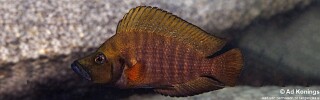
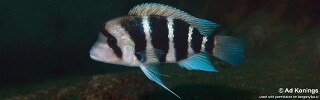
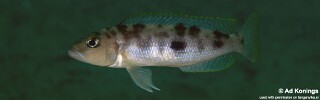
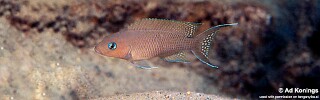
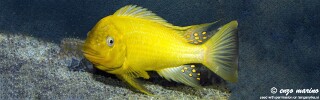
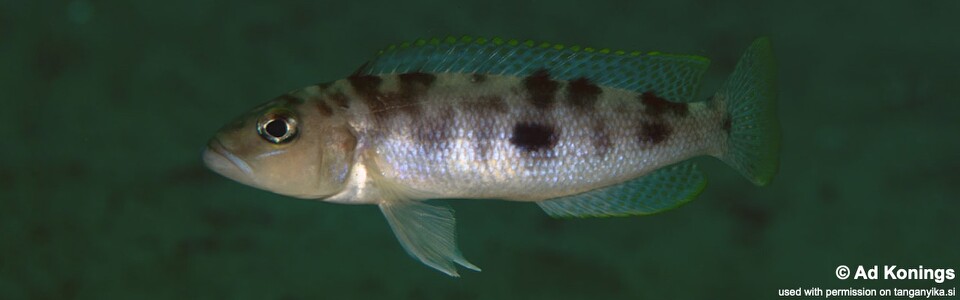




Photo gallery