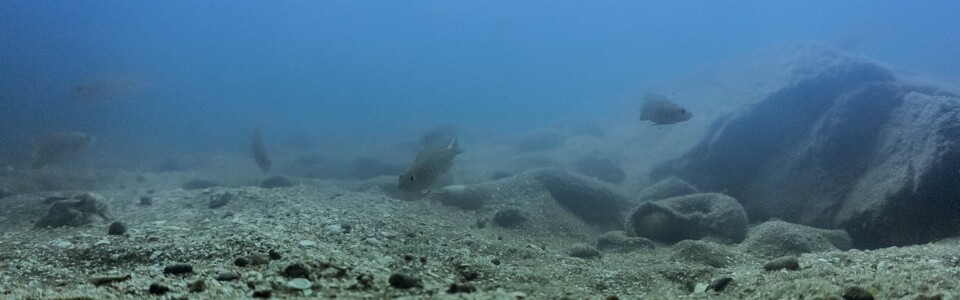
Lake Tanganyika cichlids may not be as brightly coloured as many Lake Malawi cichlids, but their behaviour is often
even more fascinating. They are an extremely diverse group of cichlids that have adapted in different ways to very
specific habitats within Lake Tanganyika. Because of that, there is no single “universal recipe” for setting up a
Tanganyika aquarium—everything depends largely on which species you plan to keep. Broadly speaking, however, the same
basic principle applies as with Malawi aquariums: rocks and sand are the signature of these setups.
In this article we will try to explain, in a clear and practical way, what you should pay attention to when planning
and setting up a Lake Tanganyika aquarium. At the end, we will also show several examples of well-designed and properly
stocked Tanganyika aquariums that represent different habitat zones of this remarkable lake.
Substrate
One of the first and most important choices in a Tanganyika aquarium is the substrate. The most suitable—and arguably
the only truly appropriate—substrate is sand, more precisely silica/quartz sand. Not only because it reflects the
natural bottom of Lake Tanganyika, but also because it fits the needs and behaviour of these fish.
Coral sands that have become popular in recent years are often unsuitable because they can have sharp edges and may
injure fish—especially during feeding behaviour when fish pick up sand and sift it through their mouths in search of
food. In addition to being smooth, the substrate should not negatively affect water parameters. This is an important
point, because many commercial “aquarium sands” (especially those marketed for planted aquariums) can lower pH, which
is not suitable for Lake Tanganyika cichlids that require hard water with a high pH.
When choosing sand, also pay attention to colour: it should look natural. Very bright/white sand can have a negative
effect on fish (stress and washed-out colours are common). Even more important is grain size—an ideal range is roughly
0.5 to 2 mm. When adding the substrate, consider depth as well. In Tanganyika aquariums it is recommended to use at
least 5 cm of sand or more, especially for species that constantly dig and move sand.
Smooth limestone-based sands can work well, and some quartz sands are also excellent. Very affordable quartz sand can
often be purchased from building supply stores; it simply needs to be thoroughly rinsed before use. One popular option
among aquarists is Kema Fuga Sand 200 (grain size 1–2 mm). Of course, any quartz sand with suitable grain size and
natural colour can be used.
Given the enormous size of Lake Tanganyika, it is logical that sand varies slightly from location to location. Below
are a few examples of sand from different sites in the lake.
When choosing decoration for a Tanganyika aquarium, the priority should always be the needs of Tanganyika cichlids—and
those needs differ greatly between species. Shell-dwellers and open-sand species have very different requirements than
rock-dwelling species (such as many Julidochromis).
Regardless of which Tanganyika species you keep, in most cases you will still want to include at least some rocks.
Even for sand-dwelling species, a few rocks are beneficial because they offer shelter—especially during breeding,
when aggression tends to rise. For rock-dwelling cichlids you will need many more rocks, arranged to create as many
caves and crevices as possible. These structures serve as hiding places and spawning sites.
Rocks are therefore one of the core elements of a Tanganyika setup. In the lake itself, rocks are naturally very
diverse. Many types of rock can be used, including limestone-based rocks that may be unsuitable for other aquariums
but are often beneficial here because they can support the higher hardness and pH required by Tanganyika cichlids.
The main thing to avoid is sharp-edged rock, as fish can injure themselves when chasing each other.
Depending on the species you keep, rock shape also matters. Some species live deep in caves and narrow cracks, so choose
stones that allow you to build stable structures with many hiding places. You can buy rocks, but collecting your own is
often cheaper. In either case, it is recommended (and nearly mandatory) to boil them before adding them to the aquarium.
A potential downside of natural rock is weight. Rock structures must be built with care so they cannot collapse.
Many Tanganyika cichlids dig actively, which can undermine sand under rocks and cause stacked stones to shift or fall.
A very good safety measure is to place a sheet of plexiglass or a PVC foam board (Forex) on the bottom glass to reduce
the risk of cracking the aquarium if rocks slip (choose materials that do not negatively influence water parameters).
A lighter alternative is lava rock, but it is not suitable for all Tanganyika cichlids because it may have sharp edges.
Highly aggressive fish can injure themselves while chasing, and shy fish can injure themselves while squeezing into
tight spaces.
In recent years, more and more artificial backgrounds and “rock modules” (3D modules) have become available, typically
made from styrofoam or similar materials. You can build such backgrounds yourself or order custom-made pieces.
Some of the better-known options are Back to Nature backgrounds and modules.
Personally, I have also had very good experiences with the more budget-friendly
Aquadecor backgrounds and 3D modules.
The clear advantage of artificial rockwork is lower weight. A disadvantage (for some products) is that certain 3D
backgrounds and modules can take up a significant amount of water volume inside the aquarium. Some manufacturers now
offer hollow 3D modules that occupy much less volume. The internal cavities can also become excellent hiding places
or breeding sites for certain Tanganyika species.
Besides rocks, shell decoration is another key element—especially for shell-dwelling cichlids (so-called “shellies”).
For these species, snail shells are not optional; they are essential. Shell-dwellers live and breed inside shells.
Some other Tanganyika cichlids that do not live in shells full-time may still use shells for breeding.
The most suitable shells are those that are also most common in Lake Tanganyika: the shells of the lake snail Neothauma.
These shells have ideal size and shape for Tanganyikan shell-dwellers. However, Neothauma shells can be difficult to
find and are often expensive. As an alternative, shells of local snails can also work well if they are of suitable
size and shape.
Left: shells of the Tanganyikan snail Neothauma. Right: an alternative shell option.
Plants
When most people think of Tanganyika (and similarly Malawi) aquariums, they usually imagine rock-and-sand aquariums
without plants—just fish and stones. This is often accurate, because many Tanganyika habitats have very little plant
growth, especially the rocky zones.
That said, plants do exist in Lake Tanganyika, mainly in certain shallow and sheltered areas. In some locations,
aquatic vegetation can be seen and can be replicated in the aquarium if you want a more “biotope-like” setup.
If you decide to keep plants with Tanganyika cichlids, choose robust species and be realistic: many Tanganyika cichlids
dig, move substrate, and can uproot plants. Also consider the diet of your fish. Some Tanganyika species are
herbivorous and will graze on algae and sometimes softer plant material, while others are strictly carnivorous.
When choosing lighting for a Tanganyika aquarium, the most important consideration is which cichlid species you keep
(or plan to keep). Different habitats and depths in Lake Tanganyika receive very different light intensity.
Many Tanganyika cichlids are not fans of extremely bright lighting, especially species that naturally live deeper
or in shaded rocky zones.
Strong lighting can stress some fish, make them more skittish, and may also intensify aggression in certain setups.
If you want brighter lighting for aesthetic reasons (or because you keep plants), consider using dimmable lighting,
floating plants, or strategic rockwork to provide shaded areas.
Water
Water parameters in Lake Tanganyika vary slightly depending on location and especially depth, but overall the lake
is known for stable, alkaline, mineral-rich water. In general, Tanganyika cichlids require hard water with high pH.
The most important practical lesson for aquariums is stability. Fish can adapt to small deviations from “ideal” values,
especially captive-bred fish, but they do not tolerate sudden changes well. Avoid drastic swings in pH, hardness, and
temperature—steady conditions are more important than chasing perfect numbers.
Filtration
Filtration is one of the most important aspects of any aquarium, and it is even more important in Tanganyika setups
because many Tanganyika aquariums are stocked with fish that produce a substantial biological load, and many setups are
minimally planted (meaning fewer plants to absorb nutrients).
A good filter must provide both mechanical filtration (removing particles) and biological filtration (housing beneficial
bacteria). Biological filtration is the cornerstone of a stable Tanganyika aquarium, because it converts toxic waste
products into less harmful forms through the nitrogen cycle.
Many types of filtration can work well: canister filters, sumps, or large internal filters, depending on the aquarium size
and stocking. In general, Tanganyika aquariums benefit from strong water movement and high oxygenation, which also supports
biological filtration. This can be achieved through filter outflow positioning, circulation pumps, and/or air stones.
Regular maintenance is critical. A powerful filter does not replace water changes. It is better to have slightly “overbuilt”
filtration and keep the system clean and stable than to run at the limit.
When cleaning filter media, avoid washing everything in tap water. Rinse biological media gently in aquarium water (from
a water change) so you do not destroy beneficial bacteria. Mechanical media can be cleaned more frequently, while
biological media should be disturbed as little as possible.
Choosing Suitable Species and Stocking a Tanganyika Aquarium
The very first thing you must consider when selecting and stocking Tanganyika cichlids is the aquarium size you have.
Tanganyika species range from very small shell-dwellers to large predators, and their space needs can differ massively.
Beyond size, you must also consider behaviour, aggression, territory requirements, diet, and habitat preferences.
Tanganyika cichlids can be roughly grouped by habitat and lifestyle:
some live on open sand, some are shell-dwellers, some are rock-dwellers, and others live in the open water column.
The best results come from choosing species that naturally occupy different zones and do not compete directly for the
same territory and resources.
Another key factor is temperament. Some Tanganyika species are relatively peaceful and can be kept in more mixed
communities, while others are highly aggressive and require careful planning and often species-only setups.
Even within a single genus, behaviour and requirements can vary. For example, some species prefer narrow rocky crevices,
others are more open-water oriented, and some are predators that require larger prey-sized food and more space.
Social structure is also important. Some species live in large schools (shoaling/open-water species),
while others form colonies or defend small territories. If you keep schooling fish, you must keep them in proper group sizes
so they behave naturally and feel secure.
Different species also have different mating systems. Some form stable pairs, while others live in harems.
This affects how you should stock them (ratio of males to females) and how much territory and shelter you need to provide.
Finally, always keep scale in mind. Lake Tanganyika contains both some of the smallest cichlids commonly kept in aquariums
and some of the largest. Stocking choices must reflect your aquarium size and filtration capacity.
The safest approach—especially if you are new to Tanganyika—is to pick a clear concept and build around it:
a shell-dweller colony on sand, a rock-dweller community with strong rockwork, an open-water schooling display, or a
carefully balanced mixed setup with species that occupy different zones. If you plan well, a Tanganyika aquarium can be
one of the most interesting and rewarding cichlid aquariums you can keep.
Aquarium Examples
If you would like more inspiration, we also recommend the presentation with underwater footage,
where you can find many practical ideas on how to design your aquarium so it resembles the natural biotope as closely as possible:
“Lake Tanganyika Habitats”.
To make the decision even easier (and to offer a few additional ideas), below are several beautiful and well-planned aquariums
that represent different habitat zones of Lake Tanganyika.
Example 1
An aquarium representing a sandy habitat with snail shells. The shells are naturally covered with algae, which makes the setup look
very authentic (algae are also abundant in the lake). The aquarium volume is 200 L, with dimensions 100×50×40 cm.
It is stocked with the following two carnivorous species:
Lamprologus ocellatus (1 male and 1 female)
Lamprologus multifasciatus (a colony consisting of 1 male and 4 females, plus many juveniles of various sizes)
Example 2
A stunning aquarium that represents an intermediate habitat zone of Lake Tanganyika. Volume: 1,178 L; dimensions: 240×70×70 cm.
Stocked with the following carnivorous species:
Neolamprologus mustax “Orange”
Neolamprologus nigriventris
Ectodus descampsii “Chituta”
Xenotilapia papilio “Kanoni”
Xenotilapia papilio “Sunflower”
Paracyprichromis brieni “Chituta”
Example 3
An aquarium representing a rocky Tanganyika habitat. Volume: 520 L; dimensions: 130×70×60 cm.
Stocked with the following carnivorous species:
Neolamprologus longior
Neolamprologus pulcher
Neolamprologus cylindricus
Cyprichromis leptosoma
Example 4
Another rocky Tanganyika habitat—this time stocked with herbivorous cichlids. Volume: 380 L; dimensions: 180×45×47 cm.
Stocked with two Tropheus species:
Tropheus duboisi
Tropheus moorii “Bemba”
Example 5
Yet another excellent representation of a rocky Tanganyika habitat. Volume: 458 L. This is a single-species setup,
stocked only with the herbivorous Tropheus duboisi “Maswa”.
Example 6
A 200 L aquarium with dimensions 82×50×50 cm, stocked with only one colonial species: Lamprologus similis.
Even a single-species aquarium can be extremely attractive—and watching the behaviour of these cichlids is a real pleasure.
Example 7
Another single-species aquarium with colonial cichlids. Volume: 200 L; dimensions: 100×40×50 cm.
Stocked species: Neolamprologus pulcher (“Daffodil”).
Example 8
A smaller aquarium (75 L; dimensions 75×35×30 cm). Simple, but a very nice representation of a shell-bed habitat.
Stocked species:
Lamprologus multifasciatus
Lamprologus ocellatus
Example 9
A 720 L aquarium featuring rarer species and representing deeper-water Tanganyika conditions.
The only cichlid species present is Bathybates minor. In addition, there are two non-cichlids:
Mastacembelus ellipsifer and Synodontis lucipinnis.
Example 10
An aquarium representing a deep rocky habitat, with a volume of 1,900 L.
It is stocked with one of the most majestic Tanganyika cichlids: Cyphotilapia frontosa “Mikula”.
Example 11
A combination of sand-dwelling cichlids (Xenotilapia, Ectodus, Enantiopus…) and open-water cichlids is quite common.
The setup below is simple, but very suitable for this type of community: sand on the bottom, with only a few rocks as accents.
In this aquarium, Cyprichromis sp. “leptosoma jumbo” are kept together with Xenotilapia papilio “Tembwe”.
A note on species choice is important here: X. papilio is one of the few Xenotilapia that naturally lives in rocky habitat,
not on open sand. So, given the layout, a true sand-dwelling species would be an even more biotope-accurate choice.
Example 12
A 680 L aquarium that also represents a sandy Tanganyika habitat. As you can see again, setups for sand-dwelling species can be very simple:
sand on the bottom, plus a few rocks that provide shelter for weaker individuals.
This aquarium is stocked with Cyathopharynx furcifer “Kigoma”, a species known for building impressive volcano-shaped sand nests,
which can be clearly seen in the video below.





Photograph: © by Walter Vázquez
Lake Tanganyika cichlids may not be as brightly coloured as many Lake Malawi cichlids, but their behaviour is often even more fascinating. They are an extremely diverse group of cichlids that have adapted in different ways to very specific habitats within Lake Tanganyika. Because of that, there is no single “universal recipe” for setting up a Tanganyika aquarium—everything depends largely on which species you plan to keep. Broadly speaking, however, the same basic principle applies as with Malawi aquariums: rocks and sand are the signature of these setups.
In this article we will try to explain, in a clear and practical way, what you should pay attention to when planning and setting up a Lake Tanganyika aquarium. At the end, we will also show several examples of well-designed and properly stocked Tanganyika aquariums that represent different habitat zones of this remarkable lake.
Substrate
One of the first and most important choices in a Tanganyika aquarium is the substrate. The most suitable—and arguably the only truly appropriate—substrate is sand, more precisely silica/quartz sand. Not only because it reflects the natural bottom of Lake Tanganyika, but also because it fits the needs and behaviour of these fish.
Coral sands that have become popular in recent years are often unsuitable because they can have sharp edges and may injure fish—especially during feeding behaviour when fish pick up sand and sift it through their mouths in search of food. In addition to being smooth, the substrate should not negatively affect water parameters. This is an important point, because many commercial “aquarium sands” (especially those marketed for planted aquariums) can lower pH, which is not suitable for Lake Tanganyika cichlids that require hard water with a high pH.
When choosing sand, also pay attention to colour: it should look natural. Very bright/white sand can have a negative effect on fish (stress and washed-out colours are common). Even more important is grain size—an ideal range is roughly 0.5 to 2 mm. When adding the substrate, consider depth as well. In Tanganyika aquariums it is recommended to use at least 5 cm of sand or more, especially for species that constantly dig and move sand.
Smooth limestone-based sands can work well, and some quartz sands are also excellent. Very affordable quartz sand can often be purchased from building supply stores; it simply needs to be thoroughly rinsed before use. One popular option among aquarists is Kema Fuga Sand 200 (grain size 1–2 mm). Of course, any quartz sand with suitable grain size and natural colour can be used.
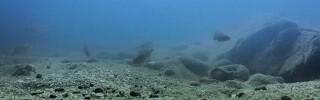
Given the enormous size of Lake Tanganyika, it is logical that sand varies slightly from location to location. Below are a few examples of sand from different sites in the lake.
Photos: © by Tautvydas Pangonis
Decoration
When choosing decoration for a Tanganyika aquarium, the priority should always be the needs of Tanganyika cichlids—and those needs differ greatly between species. Shell-dwellers and open-sand species have very different requirements than rock-dwelling species (such as many Julidochromis).
Regardless of which Tanganyika species you keep, in most cases you will still want to include at least some rocks. Even for sand-dwelling species, a few rocks are beneficial because they offer shelter—especially during breeding, when aggression tends to rise. For rock-dwelling cichlids you will need many more rocks, arranged to create as many caves and crevices as possible. These structures serve as hiding places and spawning sites.
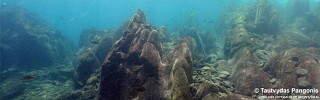
Rocks are therefore one of the core elements of a Tanganyika setup. In the lake itself, rocks are naturally very diverse. Many types of rock can be used, including limestone-based rocks that may be unsuitable for other aquariums but are often beneficial here because they can support the higher hardness and pH required by Tanganyika cichlids. The main thing to avoid is sharp-edged rock, as fish can injure themselves when chasing each other.
Depending on the species you keep, rock shape also matters. Some species live deep in caves and narrow cracks, so choose stones that allow you to build stable structures with many hiding places. You can buy rocks, but collecting your own is often cheaper. In either case, it is recommended (and nearly mandatory) to boil them before adding them to the aquarium.
A potential downside of natural rock is weight. Rock structures must be built with care so they cannot collapse. Many Tanganyika cichlids dig actively, which can undermine sand under rocks and cause stacked stones to shift or fall. A very good safety measure is to place a sheet of plexiglass or a PVC foam board (Forex) on the bottom glass to reduce the risk of cracking the aquarium if rocks slip (choose materials that do not negatively influence water parameters).
A lighter alternative is lava rock, but it is not suitable for all Tanganyika cichlids because it may have sharp edges. Highly aggressive fish can injure themselves while chasing, and shy fish can injure themselves while squeezing into tight spaces.
Photos: © by Tautvydas Pangonis
In recent years, more and more artificial backgrounds and “rock modules” (3D modules) have become available, typically made from styrofoam or similar materials. You can build such backgrounds yourself or order custom-made pieces. Some of the better-known options are Back to Nature backgrounds and modules. Personally, I have also had very good experiences with the more budget-friendly Aquadecor backgrounds and 3D modules.
The clear advantage of artificial rockwork is lower weight. A disadvantage (for some products) is that certain 3D backgrounds and modules can take up a significant amount of water volume inside the aquarium. Some manufacturers now offer hollow 3D modules that occupy much less volume. The internal cavities can also become excellent hiding places or breeding sites for certain Tanganyika species.
Photo: © by Gregor Bauer
Besides rocks, shell decoration is another key element—especially for shell-dwelling cichlids (so-called “shellies”). For these species, snail shells are not optional; they are essential. Shell-dwellers live and breed inside shells. Some other Tanganyika cichlids that do not live in shells full-time may still use shells for breeding.
The most suitable shells are those that are also most common in Lake Tanganyika: the shells of the lake snail Neothauma. These shells have ideal size and shape for Tanganyikan shell-dwellers. However, Neothauma shells can be difficult to find and are often expensive. As an alternative, shells of local snails can also work well if they are of suitable size and shape.
Plants
When most people think of Tanganyika (and similarly Malawi) aquariums, they usually imagine rock-and-sand aquariums without plants—just fish and stones. This is often accurate, because many Tanganyika habitats have very little plant growth, especially the rocky zones.
That said, plants do exist in Lake Tanganyika, mainly in certain shallow and sheltered areas. In some locations, aquatic vegetation can be seen and can be replicated in the aquarium if you want a more “biotope-like” setup.
Photo: © by Tautvydas Pangonis
If you decide to keep plants with Tanganyika cichlids, choose robust species and be realistic: many Tanganyika cichlids dig, move substrate, and can uproot plants. Also consider the diet of your fish. Some Tanganyika species are herbivorous and will graze on algae and sometimes softer plant material, while others are strictly carnivorous.
Photo: © by Ad Konings
Lighting
When choosing lighting for a Tanganyika aquarium, the most important consideration is which cichlid species you keep (or plan to keep). Different habitats and depths in Lake Tanganyika receive very different light intensity. Many Tanganyika cichlids are not fans of extremely bright lighting, especially species that naturally live deeper or in shaded rocky zones.
Strong lighting can stress some fish, make them more skittish, and may also intensify aggression in certain setups. If you want brighter lighting for aesthetic reasons (or because you keep plants), consider using dimmable lighting, floating plants, or strategic rockwork to provide shaded areas.
Water
Water parameters in Lake Tanganyika vary slightly depending on location and especially depth, but overall the lake is known for stable, alkaline, mineral-rich water. In general, Tanganyika cichlids require hard water with high pH.
The most important practical lesson for aquariums is stability. Fish can adapt to small deviations from “ideal” values, especially captive-bred fish, but they do not tolerate sudden changes well. Avoid drastic swings in pH, hardness, and temperature—steady conditions are more important than chasing perfect numbers.
Filtration
Filtration is one of the most important aspects of any aquarium, and it is even more important in Tanganyika setups because many Tanganyika aquariums are stocked with fish that produce a substantial biological load, and many setups are minimally planted (meaning fewer plants to absorb nutrients).
A good filter must provide both mechanical filtration (removing particles) and biological filtration (housing beneficial bacteria). Biological filtration is the cornerstone of a stable Tanganyika aquarium, because it converts toxic waste products into less harmful forms through the nitrogen cycle.
Many types of filtration can work well: canister filters, sumps, or large internal filters, depending on the aquarium size and stocking. In general, Tanganyika aquariums benefit from strong water movement and high oxygenation, which also supports biological filtration. This can be achieved through filter outflow positioning, circulation pumps, and/or air stones.
Regular maintenance is critical. A powerful filter does not replace water changes. It is better to have slightly “overbuilt” filtration and keep the system clean and stable than to run at the limit.
When cleaning filter media, avoid washing everything in tap water. Rinse biological media gently in aquarium water (from a water change) so you do not destroy beneficial bacteria. Mechanical media can be cleaned more frequently, while biological media should be disturbed as little as possible.
Choosing Suitable Species and Stocking a Tanganyika Aquarium
The very first thing you must consider when selecting and stocking Tanganyika cichlids is the aquarium size you have. Tanganyika species range from very small shell-dwellers to large predators, and their space needs can differ massively. Beyond size, you must also consider behaviour, aggression, territory requirements, diet, and habitat preferences.
Tanganyika cichlids can be roughly grouped by habitat and lifestyle: some live on open sand, some are shell-dwellers, some are rock-dwellers, and others live in the open water column. The best results come from choosing species that naturally occupy different zones and do not compete directly for the same territory and resources.
Another key factor is temperament. Some Tanganyika species are relatively peaceful and can be kept in more mixed communities, while others are highly aggressive and require careful planning and often species-only setups.
Photo: © by M. Kwolek-Mirek
Even within a single genus, behaviour and requirements can vary. For example, some species prefer narrow rocky crevices, others are more open-water oriented, and some are predators that require larger prey-sized food and more space.
Photo: © by Kim Jakobsen
Social structure is also important. Some species live in large schools (shoaling/open-water species), while others form colonies or defend small territories. If you keep schooling fish, you must keep them in proper group sizes so they behave naturally and feel secure.
Photo: © by African Diving Ltd
Different species also have different mating systems. Some form stable pairs, while others live in harems. This affects how you should stock them (ratio of males to females) and how much territory and shelter you need to provide.
Photo: © by Ad Konings
Finally, always keep scale in mind. Lake Tanganyika contains both some of the smallest cichlids commonly kept in aquariums and some of the largest. Stocking choices must reflect your aquarium size and filtration capacity.
Right: Boulengerochromis microlepis (the largest Tanganyika cichlid, can grow beyond 70 cm). Photo: © by Hans van Heusden.
The safest approach—especially if you are new to Tanganyika—is to pick a clear concept and build around it: a shell-dweller colony on sand, a rock-dweller community with strong rockwork, an open-water schooling display, or a carefully balanced mixed setup with species that occupy different zones. If you plan well, a Tanganyika aquarium can be one of the most interesting and rewarding cichlid aquariums you can keep.
Aquarium Examples
If you would like more inspiration, we also recommend the presentation with underwater footage, where you can find many practical ideas on how to design your aquarium so it resembles the natural biotope as closely as possible: “Lake Tanganyika Habitats”.
To make the decision even easier (and to offer a few additional ideas), below are several beautiful and well-planned aquariums that represent different habitat zones of Lake Tanganyika.
Example 1
An aquarium representing a sandy habitat with snail shells. The shells are naturally covered with algae, which makes the setup look very authentic (algae are also abundant in the lake). The aquarium volume is 200 L, with dimensions 100×50×40 cm. It is stocked with the following two carnivorous species:
Example 2
A stunning aquarium that represents an intermediate habitat zone of Lake Tanganyika. Volume: 1,178 L; dimensions: 240×70×70 cm. Stocked with the following carnivorous species:
Example 3
An aquarium representing a rocky Tanganyika habitat. Volume: 520 L; dimensions: 130×70×60 cm. Stocked with the following carnivorous species:
Example 4
Another rocky Tanganyika habitat—this time stocked with herbivorous cichlids. Volume: 380 L; dimensions: 180×45×47 cm. Stocked with two Tropheus species:
Example 5
Yet another excellent representation of a rocky Tanganyika habitat. Volume: 458 L. This is a single-species setup, stocked only with the herbivorous Tropheus duboisi “Maswa”.
Example 6
A 200 L aquarium with dimensions 82×50×50 cm, stocked with only one colonial species: Lamprologus similis. Even a single-species aquarium can be extremely attractive—and watching the behaviour of these cichlids is a real pleasure.
Example 7
Another single-species aquarium with colonial cichlids. Volume: 200 L; dimensions: 100×40×50 cm. Stocked species: Neolamprologus pulcher (“Daffodil”).
Example 8
A smaller aquarium (75 L; dimensions 75×35×30 cm). Simple, but a very nice representation of a shell-bed habitat. Stocked species:
Example 9
A 720 L aquarium featuring rarer species and representing deeper-water Tanganyika conditions. The only cichlid species present is Bathybates minor. In addition, there are two non-cichlids: Mastacembelus ellipsifer and Synodontis lucipinnis.
Example 10
An aquarium representing a deep rocky habitat, with a volume of 1,900 L. It is stocked with one of the most majestic Tanganyika cichlids: Cyphotilapia frontosa “Mikula”.
Example 11
A combination of sand-dwelling cichlids (Xenotilapia, Ectodus, Enantiopus…) and open-water cichlids is quite common. The setup below is simple, but very suitable for this type of community: sand on the bottom, with only a few rocks as accents.
In this aquarium, Cyprichromis sp. “leptosoma jumbo” are kept together with Xenotilapia papilio “Tembwe”. A note on species choice is important here: X. papilio is one of the few Xenotilapia that naturally lives in rocky habitat, not on open sand. So, given the layout, a true sand-dwelling species would be an even more biotope-accurate choice.
Example 12
A 680 L aquarium that also represents a sandy Tanganyika habitat. As you can see again, setups for sand-dwelling species can be very simple: sand on the bottom, plus a few rocks that provide shelter for weaker individuals.
This aquarium is stocked with Cyathopharynx furcifer “Kigoma”, a species known for building impressive volcano-shaped sand nests, which can be clearly seen in the video below.