Primarily deep-water habitats over rocky substrates, usually at
depths between 60 and 100 meters. The species has also been observed in
shallower rocky areas, especially in connection with reproductive activity.
Geographic distribution:
Endemic to Lake Tanganyika. Most records originate from the southern
part of the lake, including Zambian waters and adjacent areas of the
Democratic Republic of the Congo, with confirmed occurrences off Chituta Bay,
Kasenga Point, and near Kalemie.
Typical adult size:
Up to about 16.4 cm standard length; most wild individuals are
commonly smaller, around 9–10 cm.
Sexual dimorphism:
No pronounced external sexual dimorphism is described. Both sexes
occur in left- and right-mouthed morphs. Mature males may show slightly more
elongated fins.
Recommended aquarium size:
Large aquaria are required due to adult size and behaviour; tanks of
at least 400 L are considered appropriate.
Aquarium setup:
Requires spacious aquaria with rocky structures and caves that
resemble deep rocky habitats. Stable, hard and alkaline water conditions
typical of Lake Tanganyika are essential. Compatibility with other fish is
limited due to aggressive scale-feeding behaviour.
Diet:
Lepidophagous predator specializing in feeding on the scales of other
fishes, which make up the vast majority of the diet. Occasionally consumes
small fish or fry.
Breeding:
Maternal mouthbrooder. Breeding pairs form temporary bonds, with
spawning followed by incubation of eggs in the female’s mouth. Fry are
released near the shoreline after the brooding period.
Aggression:
Aggressive towards other fishes due to its specialized scale-feeding
behaviour; territorial interactions may occur, especially during breeding.
Special notes:
Perissodus eccentricus is characterized by a strongly
asymmetric mouth, with individuals occurring as left- or right-mouthed morphs.
This bilateral asymmetry enables lateral attacks on prey and is maintained in
populations by negative frequency-dependent selection, resulting in an
approximately equal ratio of both morphs. The species represents a highly
specialized element of the Lake Tanganyika cichlid radiation and plays an
important ecological role through its unique scale-eating predation strategy.

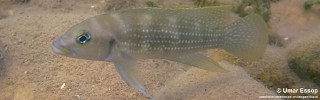
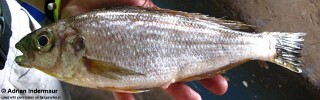
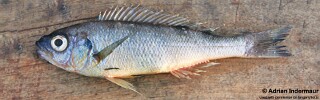
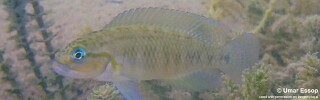
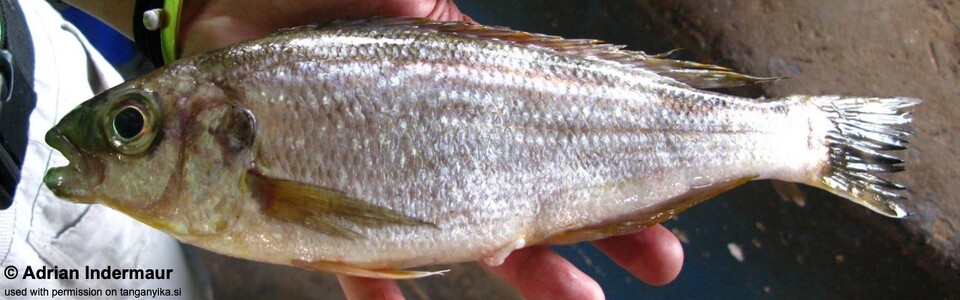




Photo gallery