Between Usumbura and Ruzizi River, Lake Tanganyika, Burundi
Geographic distribution:
Historically recorded mainly from the northern part of Lake Tanganyika.
Its pelagic ecology and more recent records from the southern part of the
lake suggest a lake-wide distribution.
Typical adult size:
The largest examined specimen measured 29 cm standard length.
Sexual dimorphism:
No pronounced morphological dimorphism has been reported. Males
typically have somewhat elongated unpaired fins and a more robust overall
body shape. Live coloration, including breeding coloration, is not known.
Biotope:
A deep-water dwelling species, recorded from 40 to 100 meters depth.
The preferred prey species are unclear, and it is not established whether the
species is primarily benthic or pelagic.
Diet:
A specialized scale eater. Examined stomach contents have contained
only scales. It is not established whether the species feeds exclusively on
scales or also shows opportunistic feeding behaviour; available data may be
biased because examined specimens were market fish.
Breeding:
Most likely a pair-bonding biparental mouthbrooder, as in other members
of the genus. Some evidence suggests the species may at times aggregate in
larger shoals, but any implications for breeding behaviour are not known.
Special notes:
This species has never been imported or
maintained in aquaria. Due to its large size and specialized feeding habits,
it is only marginally suitable for aquarium keeping.
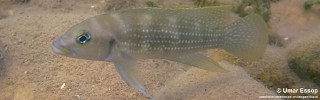
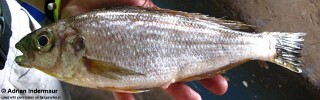
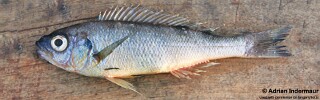
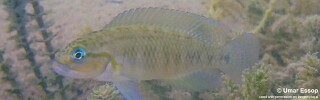
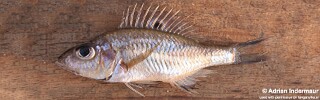
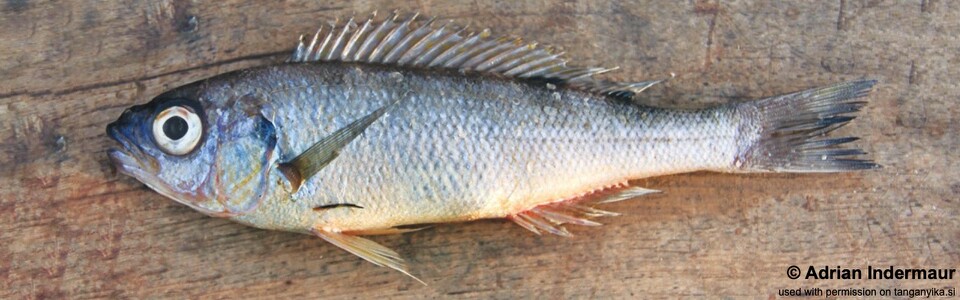




Photo gallery